Motor + Terminal Blocks (TB10·TB4) — the Panel Boundary
We've covered the panel entrance (MCCB + fuse) and the switch that drives the motor (MC). This guide reaches the destination of all that electricity — the motor — and the terminal blocks (TB) that bridge inside-panel to outside-panel.
Motor U·V·W·PE — where electricity becomes torque
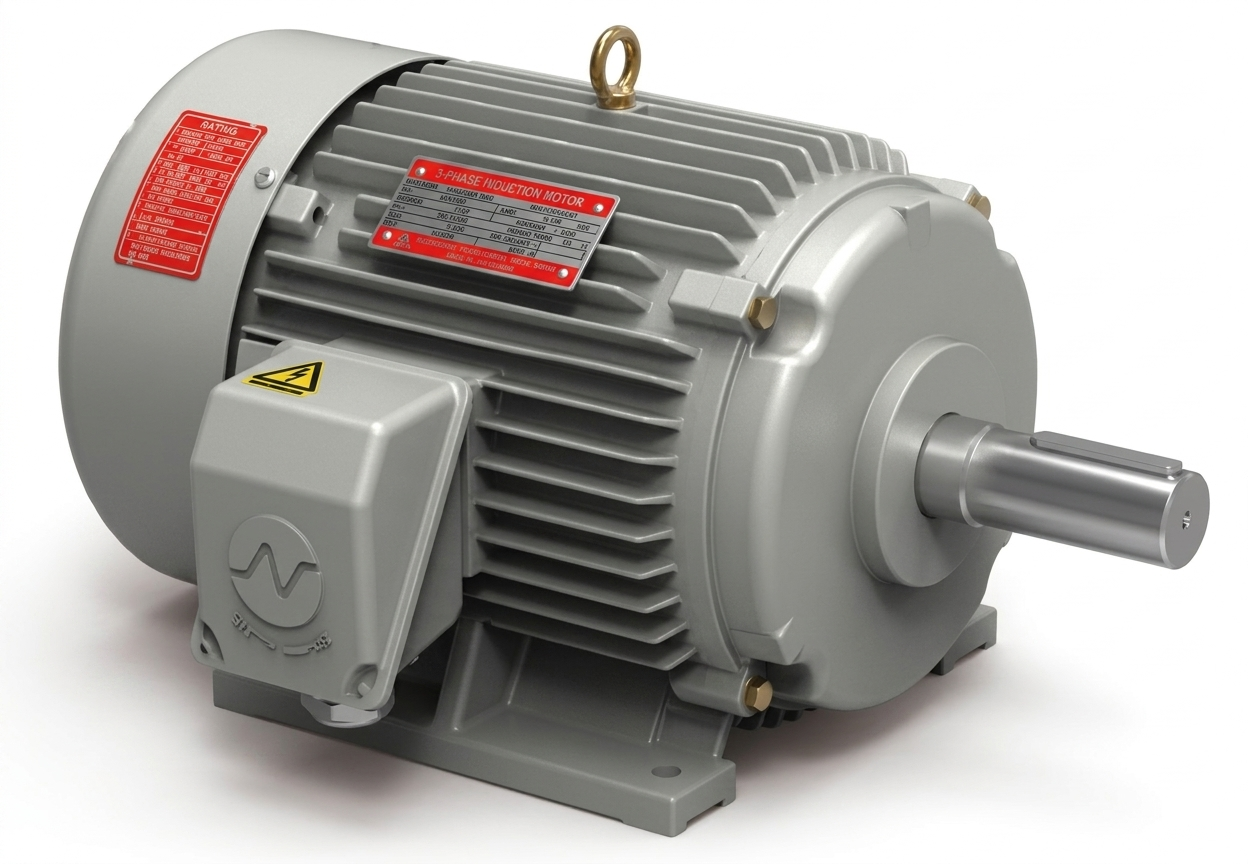

- U · V · W — L1·L2·L3 arrive staggered slightly in time, creating a rotating magnetic field that drags the rotor around with it. The whole "why does a 3-phase motor spin?" answer in one line: the supply arrives staggered, and the field spins to follow.
- PE — bonded directly to the motor's metal housing. Idle in normal use, but if the casing is ever energized by a fault, PE drains it to ground instantly — the final shock-prevention net.
Terminal blocks TB10 · TB4 — the screw bridges across the boundary
A motor is too big, too hot, and too vibration-prone to live inside the panel. So it always sits *outside*, and only the wires cross the boundary. The bridge that makes that crossing clean is the terminal block (TB) — a pass-through part where each top screw is wired straight to the bottom screw below it.
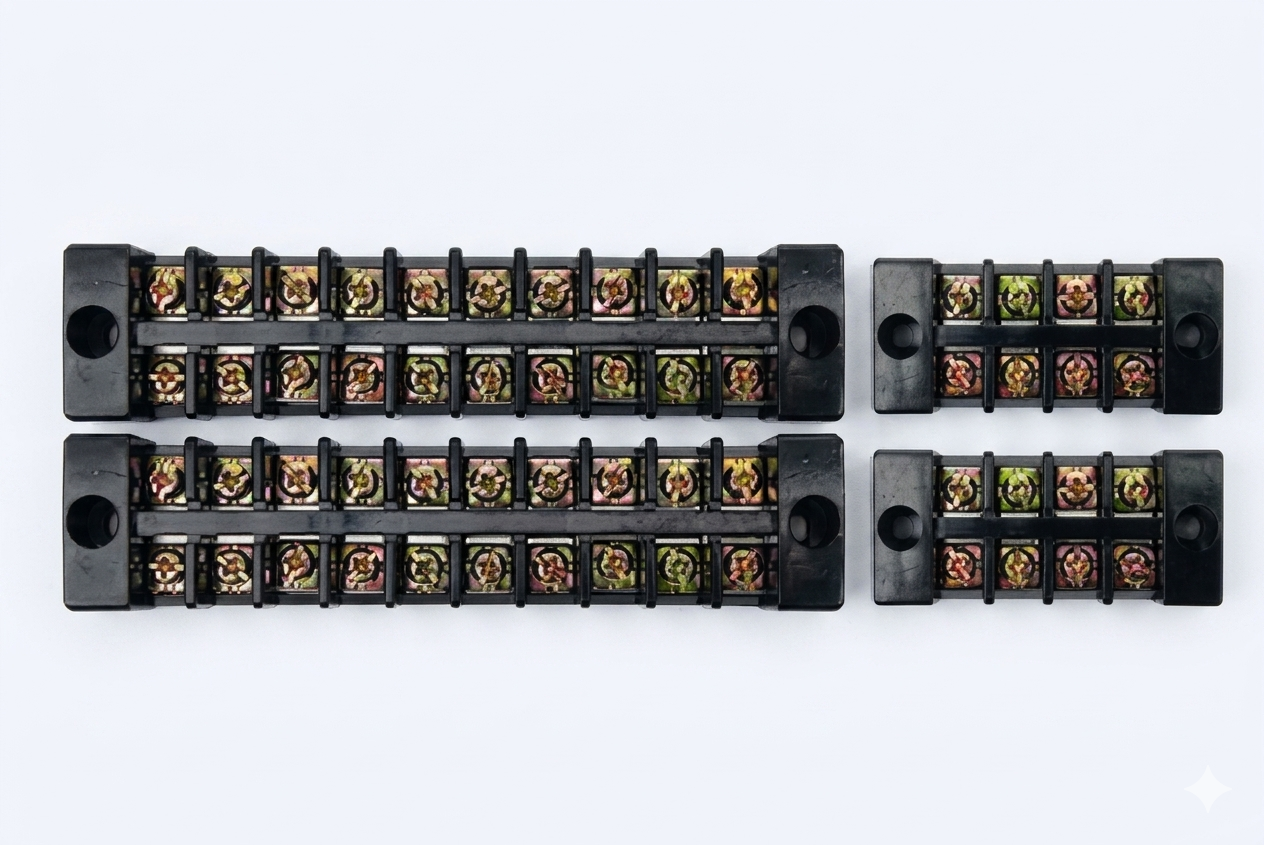

If it's just a pass-through, why fit one? Two reasons.
- Mechanical isolation — the stiff single-conductor wire inside the panel and the flexible cable outside meet at one neat junction, so pulling or vibrating the outside cable never reaches the panel internals.
- Serviceability — to swap a motor, you undo four screws instead of opening the panel.
A TB10 (10-pole, panel-internal) only needs L1·L2·L3·PE for one motor, so it uses just the middle pins 4·5·6·7 and leaves the rest as spares. A TB4 (4-pole) is a mini block sized for exactly one motor's four conductors.
Terminal-block ordering — the #1 disqualifier
For the full terminal rules, see Wire color & terminal rules.
The path electricity takes to the motor
Press the button and current runs end-to-end in one path:
Power → TB4 (cable inlet) → TB10 (top) → MCCB → MC main → TB10 (bottom) → TB4 (motor side) → Motor (U·V·W)
- Current crosses the panel boundary twice — once on the way in (top), once on the way out (bottom).
- PE (green) skips the breaker and the MC, passing straight through the four terminal blocks to reach the motor's frame.
Next
That wraps up the main-circuit parts block (protection → switch → load + boundary). Next come the parts that energize their own coils on a condition — EOCR (trips on overcurrent) and the timer (acts after a delay). See all guides →
Try it yourself
Trace the path to the motor in the Korean Electrician practical simulator →